Dry needling explained
Precision treatment for muscle pain
Dry needling is frequently misunderstood or confused with acupuncture. Understanding how and why it works helps set realistic expectations — and explains why it is so effective when used as part of an integrated osteopathic approach.
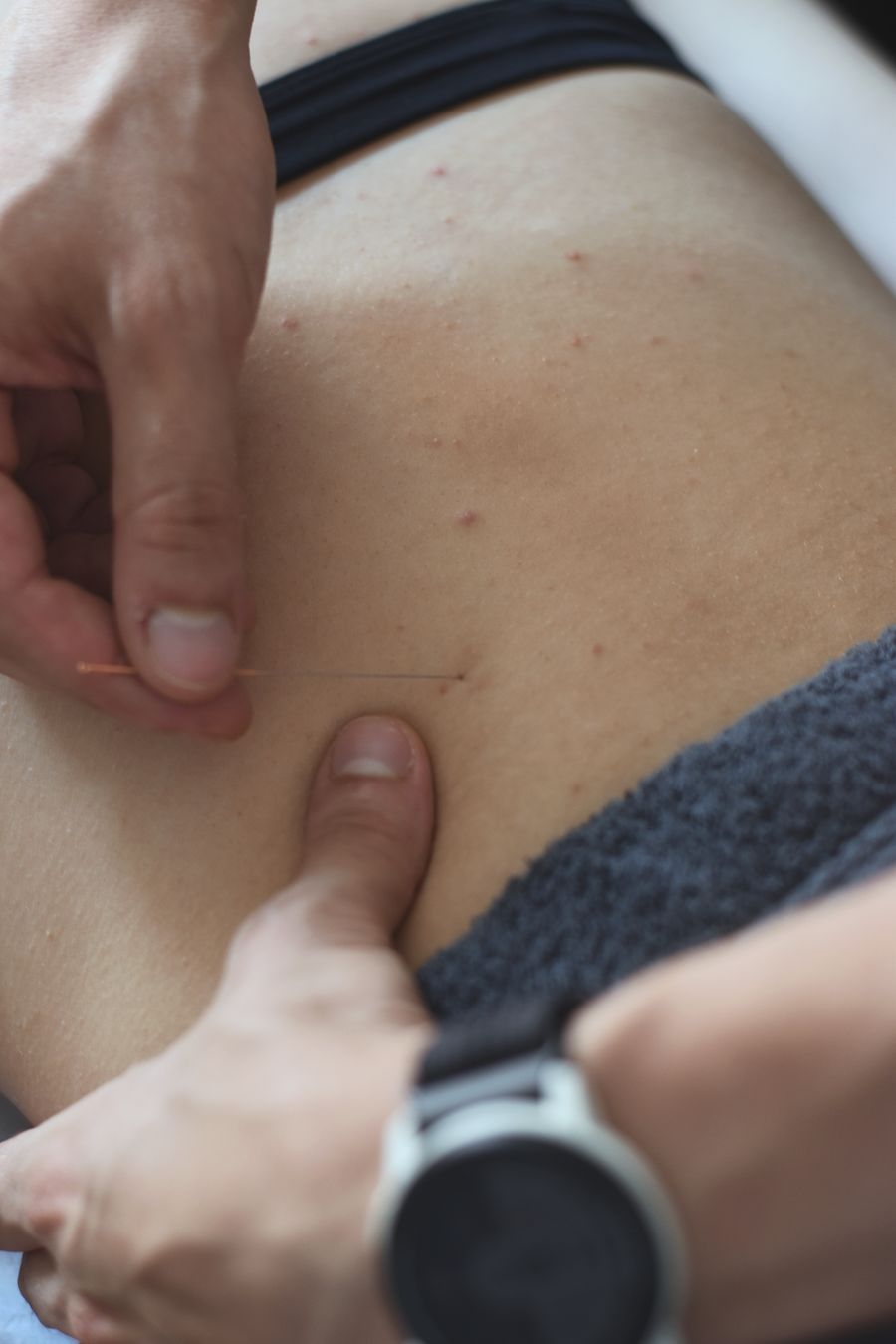
What is dry needling?
Dry needling uses the same fine, sterile, single-use needles as acupuncture — but is rooted in Western anatomy and neuroscience rather than traditional Chinese medicine. The needle is inserted directly into a myofascial trigger point: a localised, hyperirritable spot within a taut band of skeletal muscle that causes a predictable pattern of referred pain when compressed or stimulated.
The term "dry" distinguishes the technique from "wet needling" — injections of local anaesthetic or corticosteroid. The needle itself is the therapeutic instrument, with no substance injected.
How does it work? The mechanism
When the needle reaches a trigger point, it typically provokes a brief involuntary muscle twitch — called a local twitch response (LTR). This twitch is a positive clinical sign: it indicates precise needle placement and is associated with the desensitisation of the trigger point. The proposed mechanisms include mechanical disruption of dysfunctional motor end-plate activity, modulation of nociceptors (pain-sensing nerve endings) and stimulation of the body's own endogenous analgesic systems via the release of enkephalins and other neurotransmitters.
The result is a reduction in local muscle tension, improved blood flow to previously ischaemic tissue, and a lasting decrease in referred pain.
What does the evidence say?
A 2023 umbrella review synthesising data from 36 systematic reviews — published in the Journal of Clinical Medicine by researchers at Ghent University — concluded that dry needling produces clinically meaningful reductions in musculoskeletal pain compared to no treatment or sham intervention across multiple body regions.
A separate systematic review published in Disability and Rehabilitation (2024, Tufts/Duke collaboration) found that dry needling produced similar outcomes to cortisone injections and platelet-rich plasma (PRP) for musculoskeletal pain disorders, making it a clinically viable, non-pharmacological alternative for many patients.
Dry needling vs acupuncture — what is the difference?
Both techniques use the same type of needle, but they differ in their theoretical framework, target and intent. Acupuncture is grounded in Traditional Chinese Medicine, targeting specific meridian points to balance the flow of qi (life energy). Dry needling is grounded in Western musculoskeletal anatomy: needles are placed into identifiable anatomical structures — trigger points within specific muscles — based on physical examination findings rather than a meridian map.
At Verteo, dry needling is practised as an adjunct to osteopathic assessment and treatment. The trigger points targeted are identified during the same clinical examination that guides all manual therapy decisions — making it a seamless, integrated part of care rather than a separate modality.
In pain? Don't wait for it to pass.
Most conditions respond best when treated early. Online booking takes under two minutes — or message directly to check availability.